The manufacturing world has been overwhelmed with buzzwords over the last ten years: Industry 4.0, the Industrial Internet of Things (IIoT), Big Data, and the Smart Factory. The marketing brochures give promises of a heavenly production floor where machines can communicate with each other, robots can foresee their malfunctions, and efficiency can increase through magic.
However, to a production manager or an engineer on the ground, the question is: How does this work? Beyond the hype, what is the mechanical and digital truth of a smart factory? And more to the point, what do basic processes, such as part marking and identification, fit in this high-tech game?
This guide breaks down the process of intelligent manufacturing and the way of how the simple cordless marking machine has been transformed into a key station in the digital supply chain.
The Nervous System of a Smart Factory
To make sense of smart manufacturing, one need not think of a factory as a bunch of individual machines, but as one living organism. The data in a conventional factory is isolated.
The CNC machine has the knowledge of cutting metal, the conveyor belt does not know when to end it, and the ERP system will not know the actual status until a human being manually keys it in.
- Data Acquisition (The Senses): This begins with sensors. Motors have vibration sensors, furnaces have temperature gauges, and assembly lines have vision systems that receive large volumes of raw data in real-time.
- Interconnectivity (The Nerves): This information is not held captive in the machine. Machines broadcast this data through protocols such as MQTT or OPC-UA to a central network (Edge or Cloud).
- Analytics & Action (The Brain): This information is processed by advanced software. It may be observed that one of the drill bits is vibrating excessively, and it will break after 4 hours. The system automatically then orders a maintenance schedule and reroutes production to another line in order to prevent downtimes.
Traceability
It is easy to monitor the production capacity using a smart system, but monitoring the individual parts is difficult. When one particular gear in a gearbox breaks in three years’ time, how does the manufacturer know which batch it was, who made it, and what the temperature of that furnace was?
This is where Traceability comes into the picture, and marking machines become the interlocutors of smart manufacturing.
A smart factory means a physical component is nothing other than a piece of metal until it receives a digital identity. It is typically a distinct alphanumeric code, QR code, or Data Matrix code. This code connects the actual object with its cloud Digital Twin.
The Marking Machines: The Stylus to Smart Node
The marking machine has been completely networked into the IT network in a Smart Manufacturing ecosystem. The following is the change in workflow:
- Automated Data Flow: Each time a part is presented to the marking station, the marking machine reads a work order or is triggered by a signal sent out by the PLC (Programmable Logic Controller). Automatically, it retrieves the right information in the ERP system in the company, such as serial number, date code, and encryption keys. None of the human typing implies the absence of typos.
- The Feedback Loop: After the mark is made (with laser or dot peen), the machine does not stop just because it has been made. It sends a message back to the central server: “Part #12345 was marked at 10:42 AM successfully. This timestamp formally records the part into the online system.
- Downstream Verification: This is where the cameras scan the mark to confirm it is readable. When the mark falls below a predetermined quality level, the system will signal the line to halt to avoid the passage of bad parts.
The Resurgence of Elasticity: The Cordless Revolution
Smart manufacturing is not merely a data issue, but it is also a bit about agility. Fixed assembly lines are being replaced with mobile production units. The machinery must be mobile and flexible, just like the employees. This change has promoted the high rate of adoption of the cordless marking machine.
In the conventional structures, it was a logistical nightmare to mark large, heavy, or immovable assets (such as chassis, oil pipes, or structural beams). You were obliged to take the mountain to the machine. Or you made use of pneumatic markers, which were held by lengthy air hoses and power cords, which grossly restricted the range and safety.
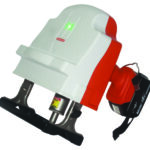
This is altered with the modern cordless marking machine. These are battery-operated handheld devices that are lightweight and enable operators to move freely around the factory floor or into a stockyard to mark parts.
Conclusion
Smart manufacturing does not only mean purchasing robots, but bridging the gap between the digital record and the real world. You cannot trace something you do not know where it is. And when you can not trace it, you can not optimize it.
Marking machines are no longer the stamping tools. They are physical world data entry devices. It can be a high-speed laser, built into a robotic cell, or a cordless marking machine on the construction site, but he/she is sure that each product of his/her business will carry the story he/she has to tell, forever.
Upgrade your smart factory with accuracy. Marknstamp offers a variety of connected and portable marking solutions that are available today.
FAQs
Q: What is the importance of marking Industry 4.0?
It renders a personalized electronic identification of each component, which allows tracking it in real time, gathering data, and managing its lifecycle.
Q: Are portable marking machines compatible with ERP systems?
Yes, the models can be advanced and have Wi-Fi or Bluetooth to be able to fetch data and report marking status to central systems.
Q: What is the advantage of a cordless marking-machine?
It provides full mobility in marking heavy or immobile components and retaining digital connections and quality of precision.