Summary
Laser engraving machines are highly precise for fine text and logos. Fibre lasers are best for metal and engineering tools. CO2 is better for non-metals and coated materials. A stamper machine is stronger for deep, bold impressions. Precision depends on focus, optics, material, and settings. MarknStamp offers industrial laser marking options for mixed production needs.
India’s manufacturing base is still expanding. According to PIB, manufacturing growth reached 5.4% year-on-year in July 2025, with IIP at 3.5%. That makes precise marking more important for factories and engineering tools.
Many buyers want detailed results. They need crisp logos, readable serials, and clean part numbers. They also want a machine that works on real shop floors in India.
This guide explains how precise laser engraving machines can be. You will see what affects detail quality, when to choose fibre or CO2, and when a stamper machine is the better fit.
How precise are laser engraving machines for detailed designs?
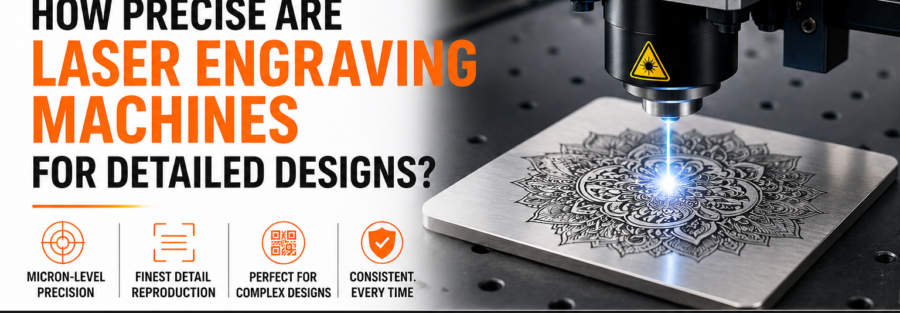
Laser engraving machines can be extremely precise. That is why they are widely used for serial numbers, logos, QR codes, and fine industrial marking. Gravotech describes its fibre laser engraver as performing precise markings quickly. MarknStamp says its ECO Laser creates sharp, legible, and consistent marks, even for complex designs.
Precision is not just about the machine. It also depends on focus, beam quality, optics, and motion control. Gravotech also says its 3D module can guarantee precise and uniform laser marking on complex shapes.
That means detailed designs are very achievable. Thin lines, micro-text, and logos usually come out well on suitable materials. The result is strongest when the file, material, and settings all match.
Which machine gives better detail: laser engraving machine laser or stamper machine?
For detailed designs, the laser engraving machine wins. It gives finer edges, better control, and more repeatable results. A stamper machine is built more for force than visual detail.
| Option | Best for | Detail level | Shop-floor use |
| Laser engraving machine laser | Logos, serials, QR codes, small text | Very high | Engineering tools, tags, industrial parts |
| Stamper machine | Deep impressions, bold marks, thick lines | Medium | Rugged parts, heavy-duty marking |
MarknStamp notes that stamper machines may need pressure control and precision for deep impressions or thick lines. That is useful, but it is not the same as fine engraving detail.
So the rule is simple. Choose laser for detail. Choose stamper for depth and impact.
What affects engraving precision on engineering tools?
Engineering tools need clean, repeatable marking. The biggest factors are material hardness, surface finish, design size, and the machine’s focus. MarknStamp says marking size and complexity decide which machine is needed.
Main factors that change detail quality
- Focus distance and lens setup
- Material type and reflectivity
- Surface coating or curvature
- Power and speed balance
- File quality and line thickness
- Stability of the part during marking
A flat stainless-steel tag is easier than a curved tool body. A clean, clamped part gives sharper results than a moving one. That is especially important for engineering tools used in Pune, Rajkot, Chennai, and Faridabad workshops.
For automotive, aerospace, medical, and defence parts, traceability matters too. Gravotech highlights precise part traceability and industrial identification for these sectors. That is why laser engraving is often chosen for production-grade tooling.
Which laser type is more precise for your material?
Fibre vs CO2 for detailed work
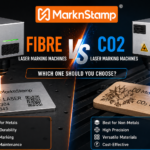
Fibre lasers are the better choice for metals. Gravotech says fibre is ideal for metal and plastic marking, with precise and fast output. MarknStamp also positions its ECO Laser for metallic and non-metallic marking with high precision.
CO2 lasers are better for organic and coated materials. Gravotech says CO2 suits wood, paper, leather, rubber, transparent plastics, painted surfaces, and anodised aluminium.
| Material | Better choice | Why |
| Stainless steel | Fibre | Strong detail on metal |
| Aluminium tools | Fibre | Clean serials and logos |
| Wood or leather | CO2 | Better material response |
| Packaging and labels | CO2 | Fast, readable marks |
| Mixed production | Multi-source system | More flexibility |
If your work is mostly engineering tools, fibre usually makes more sense. If your work is packaging or soft materials, CO2 is often smarter. If you do both, a multi-source system is the practical answer.
How can you improve detail quality on the shop floor?
You can improve precision with simple discipline. Most problems come from setup, not the core machine. That is good news for production teams.
Best steps for sharper results
- Clean the lens and optics regularly
- Recheck focus before each batch
- Test on scrap before full production
- Lower speed if details are too light
- Increase power carefully in small steps
- Clamp the part firmly
- Save the best settings for repeat jobs
On Indian shop floors, dust and heat can affect output. Regular cleaning and preventive maintenance matter more than many buyers expect. MarknStamp also stresses maintenance, wear checks, and alignment for consistent performance.
Contextual CTA: If your parts need repeatable detail, check products and test your own material before buying. That is the fastest way to judge real precision.
Why should Indian manufacturers choose MarknStamp?
MarknStamp is positioned as a specialist in industrial marking. Its site highlights dot peen solutions and laser marking systems for industrial use. That makes it relevant for engineering tools, metal parts, and traceability jobs.
Its ECO Laser Machine is built for high-precision marking. The brand says it works on metallic and non-metallic surfaces with sharp, legible results. That is useful when your shop handles mixed component types.
For Indian buyers, local industrial fit matters. A machine should support speed, service, and repeatability. MarknStamp’s product line and industrial positioning make it a practical shortlist option.
What do people also ask about laser engraving precision?
How fine can laser engraving machines go?
They can reproduce very fine text and logos when the focus, optics, and material are correct. Fibre systems are especially strong for precise metal marking.
Is laser engraving more precise than stamping?
Yes, for detailed designs. Laser gives better control over small text, logos, and codes. A stamper machine is better when you need deep, bold, or thick impressions.
Which laser is best for engineering tools?
Fibre laser is usually best. It gives clean, durable marks on metal tools, plates, and industrial parts, which is ideal for traceability and branding.
Why do my detailed marks look fuzzy?
The usual reasons are poor focus, dirty optics, wrong speed, or weak clamping. A small adjustment often restores sharpness quickly.
Conclusion
Laser engraving machines are very precise for detailed designs. They are the better choice for fine text, logos, and traceability marks. The strongest results come from the right material, correct focus, and clean optics.
For engineering tools and metal parts, fibre laser is usually the best fit. For wood, leather, packaging, and coated surfaces, CO2 is better. For deep, rugged marks, a stamper machine still has its place.
If you want industrial-grade precision in India, MarknStamp is a solid brand to review. Book demo or talk to expert to test your material on the right machine.