By Mark N Stamp | 10 min read
For most finished stainless parts, laser annealing is the safest bet. It makes a dark mark without cutting into the surface, so there’s no recess for moisture and dirt to sit in. Dot peen is also fine, as long as the stylus and the surface stay clean. Rust on a marked stainless part almost always comes from contamination, heat damage or a crevice, not from the metal marking machine type itself.
Key insights
- Stainless doesn’t rust because of a thin chromium oxide film: damage or contaminate that film and the marked spot can corrode.
- Iron contamination is the usual culprit: a carbon steel wire brush, a dirty fixture or a shared tool leaves particles that rust on the surface.
- Annealing keeps the surface smooth: that makes it the go-to for food, medical and wet-environment parts.
- Deep marks are fine if you clean them: engraved or dot peen recesses need cleaning and sometimes passivation, not avoiding altogether.
Before you go
If you’re already seeing rust around marks, don’t change the machine first. Look at what touched the part before and after marking, the brush, the fixture, the gloves, the rack. Nine times out of ten, that’s where the iron came from.
You buy stainless steel so you don’t have to think about rust. Then a batch comes back from a customer with orange spots sitting right on the serial numbers, and suddenly you’re thinking about nothing else.
It’s frustrating, and it’s more common than you’d expect. The good news is it’s rarely a mystery. Marking touches the one thing that keeps stainless stainless, and if you understand that, picking the right method is fairly straightforward.
So let’s look at why marks rust, how each marking method affects the surface, and what to do so your marks stay clean for the life of the part.
Why do marks on stainless steel sometimes rust?
It comes down to the surface film. Once you get that, the rest makes sense.
The film that keeps it rust-free
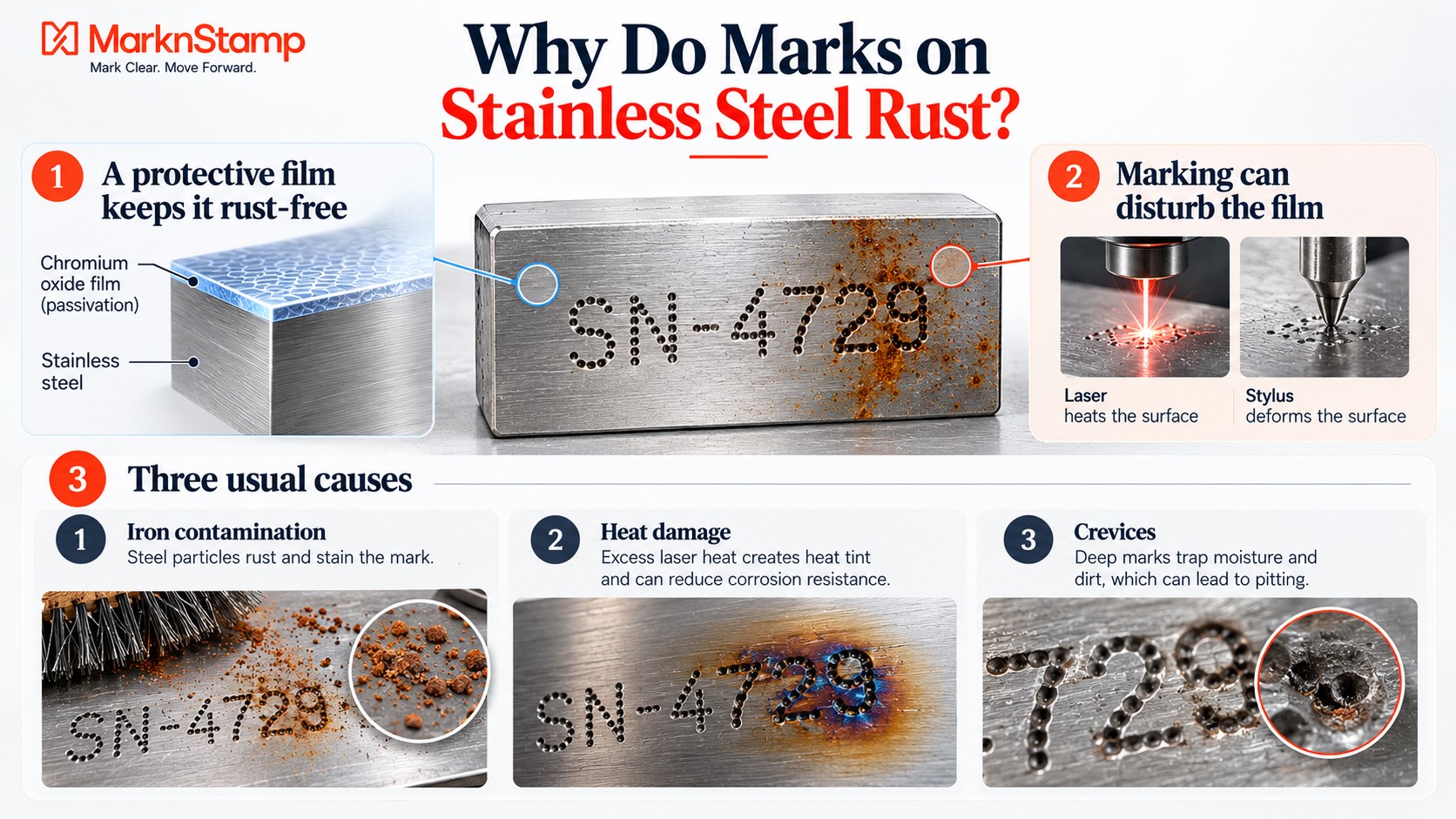
Stainless steel stays rust-free because chromium in the alloy reacts with oxygen to form a very thin protective oxide film. That process is called passivation), and the film repairs itself as long as there’s oxygen around and the surface is clean.
What marking can do to that film
Any marking method disturbs the surface in some way. A laser heats it. A stylus deforms it. Either can leave the film thinner, damaged or contaminated in the marked area.
Why the rust looks worse than it is
Often it’s surface staining from iron particles, not the stainless itself corroding. It still looks awful to a customer, and on parts going into wet or salty conditions it can turn into real pitting.
What are the three usual causes?
When we talk to shops dealing with rusty marks, it almost always comes back to one of these.
Iron contamination
Carbon steel particles get transferred onto the stainless from a wire brush, a grinding disc, a fixture, a shared bench or even a stylus that’s been used on mild steel all morning. Those particles rust, and the rust stains the part.
Heat damage
Too much laser energy can create heat tint, the straw, blue or brown colouring you see near welds. Heavy heat tint can lower corrosion resistance in that spot.
Crevices
Deep, narrow recesses trap moisture, cleaning chemicals and dirt. On some grades and in some environments, that’s where pitting corrosion starts, because the oxygen supply inside a tight crevice is poor and the film can’t repair itself properly.
| Cause | Where it comes from | What it looks like | How to prevent it |
| Iron contamination | Carbon steel brushes, fixtures, shared tools | Orange specks, often spreading | Dedicated stainless tools, clean fixtures |
| Heat damage | Too much laser energy | Blue or brown tint around the mark | Lower energy, use annealing settings |
| Crevices | Deep or sharp-edged recesses | Rust inside the characters | Clean after marking, passivate if needed |
| Chemical residue | Cutting fluid or cleaner left in the mark | Staining after storage | Rinse and dry after marking |
How does laser annealing compare?
Laser annealing is the method most people point to for stainless steel, and for good reason.
How it works
The laser heats the surface just enough to grow a dark oxide layer underneath, without removing material. The mark is black or dark grey, and the surface stays smooth to the touch.
Why stainless suits it
No recess means no crevice. The surface is easy to wipe and clean, which is why annealing is so popular on food equipment, surgical tools and anything that gets washed a lot.
What to watch
It’s a heat process, so you can still overdo it. Too much energy or too slow a speed gives heat tint around the mark. Tuned settings matter. Mark N Stamp’s enclosed Stallion laser station offers MOPA fiber sources at 30W, 60W and 120W, and MOPA’s adjustable pulse width helps control heat on stainless.
What about laser engraving?
Engraving removes material to make a recess. It has its place on stainless, just with a bit more care afterwards.
When engraving makes sense
Tools, dies and parts that get polished, blasted or heavily handled need a mark that can’t be rubbed away. An annealed mark can be polished off. An engraved one can’t.
The trade-off
You’re creating a recess, so you’re creating a potential crevice. On parts headed for harsh or wet environments, clean the marks well and think about passivation afterwards.
Keep it shallow when you can
Engrave only as deep as the mark needs to be to survive the part’s life. Deeper isn’t automatically better on stainless.
Is dot peen safe on stainless steel?
Yes, and it’s widely used on stainless across valves, pumps, flanges and heavy fabrications. You just need to keep things clean.
What the stylus does to the surface
Dot peen deforms the metal into small dimples. It doesn’t burn or add heat, so there’s no heat tint. Each dot is a small recess, though, so the cleaning rules for recesses apply.
Keep a clean stylus for stainless
If the same machine marks mild steel and stainless, give the stylus a proper clean between jobs. It’s a simple habit and it stops a lot of contamination.
Battery dot peen for big stainless parts
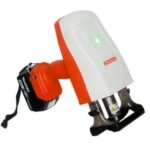
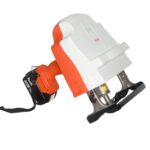
Large stainless tanks, pipes and frames can’t come to a laser enclosure. A battery-operated dot peen machine goes to the part. The MNSB-53 and MNSB-155 both have nine force settings, so you can keep the mark only as deep as it needs to be.
How do the methods compare side by side?
Here’s a quick view of how each method behaves on stainless.
| Method | Adds heat? | Leaves a recess? | Rust risk if done right | Best for |
| Laser annealing | Yes, controlled | No | Very low | Finished, cleanable parts |
| Laser engraving | Yes | Yes | Low with cleaning | Tools, dies, heavy-wear parts |
| Dot peen | No | Yes, small dimples | Low with clean stylus | Large, raw or installed parts |
| Hand stamping | No | Yes, deep and sharp | Higher, crevice-prone | Rarely the best choice now |
Reading the table
None of these methods causes rust by itself. What changes is how forgiving each one is. Annealing forgives the most, and stamping forgives the least.
How do you stop marks from rusting after marking?
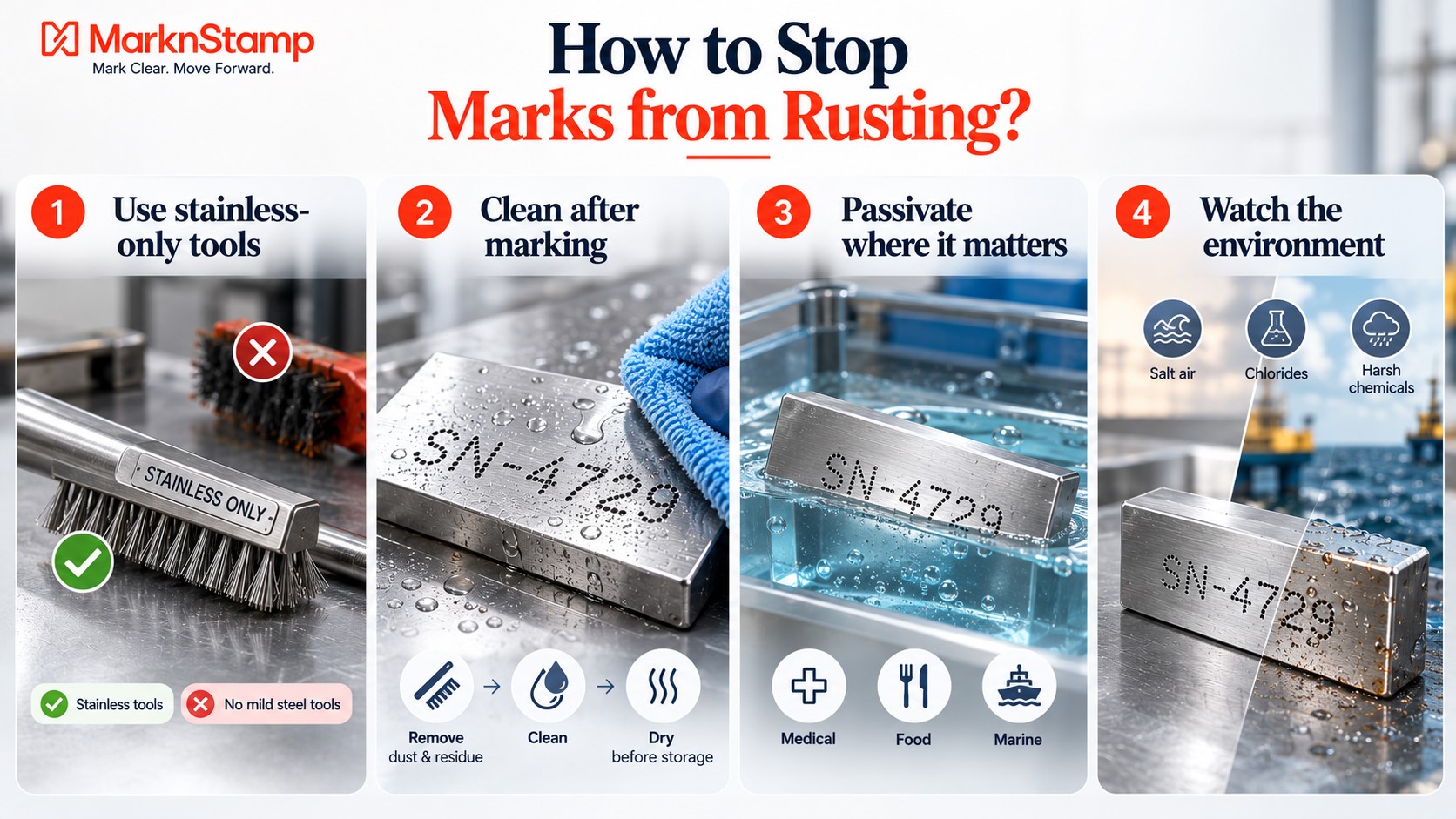
A few simple habits do most of the work, whatever marking machine you use.
Use stainless-only tools
Brushes, scrapers and fixtures that touch stainless shouldn’t touch mild steel. A separate, labelled set is cheap insurance.
Clean after marking
Wipe away dust, fumes residue and fluid, especially from inside recessed marks. Dry the part before it goes into storage.
Passivate where it matters
For parts headed for medical, food or marine use, a passivation step after marking restores the protective film properly. Check whether your customer’s specification already asks for it.
Watch the environment
Salt air, chlorides and certain cleaning chemicals are hard on stainless. Parts going into those conditions deserve the gentlest marking method and the most careful cleaning.
Which method should you choose?
Answer these four questions and you’ll usually have your answer.
Does the part get washed or go into food, medical or wet use?
Choose laser annealing if the part can go into an enclosure.
Will the mark be polished, blasted or worn?
Go with engraving or dot peen, then clean and passivate if needed.
Can the part move to the machine?
If not, you’ll need a portable dot peen machine. Mark N Stamp’s guide to deep marking on hardened metals without damaging the component is worth a read if your stainless parts are also heat-treated.
How critical is the look?
If a customer will see the mark up close, annealing gives the cleanest finish.
Wrapping up
Stainless steel doesn’t rust because of a thin film on its surface, and marking is one of the few things that touches that film. Treat it with care and almost any method works. Get careless and even the best laser gives you rusty marks.
For finished parts that get cleaned a lot, laser annealing is hard to beat. For big, raw or heavy-wear parts, dot peen and engraving do the job well, as long as you keep tools clean and give the marks a proper wipe-down and passivation where the use calls for it.
If rust around your marks is a live problem, send Mark N Stamp a photo of the part and tell them what touches it from cutting to packing. Working out the cause first is quicker than swapping machines and hoping.
FAQs
Why is my stainless steel rusting where it was marked?
Usually iron contamination from carbon steel tools, heat damage from too much laser energy, or dirt and moisture trapped in recessed marks. The marking method alone rarely causes it. Clean tools and proper settings fix most cases.
Is laser annealing better than engraving for stainless steel?
For finished parts that get washed or handled, yes. Annealing leaves a smooth, dark mark with no recess. Engraving is better when the mark has to survive polishing, blasting or heavy wear on the part.
Can dot peen marking cause rust on stainless steel?
Not by itself. Dot peen adds no heat. Problems come from a stylus contaminated with mild steel or from dirt left in the dots, so keep the stylus clean and wipe parts after marking.
Do I need to passivate stainless steel after marking?
For medical, food and marine parts, it’s often worth it, and some customer specifications require it. Passivation restores the protective chromium oxide film in the marked area and removes any free iron left on the surface.
What is heat tint on laser-marked stainless steel?
It’s the straw, blue or brown colouring around a mark when too much heat goes in. Heavy heat tint can reduce corrosion resistance in that spot. Lower energy or faster speed usually prevents it.
Which metal marking machine is best for stainless steel parts?
For small, finished parts, a fiber laser using annealing settings. For large, installed or raw parts, a portable dot peen machine. Many plants use both, depending on the part and where it’s marked.