By Mark N Stamp | 10 min read
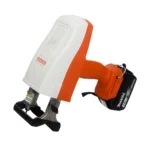
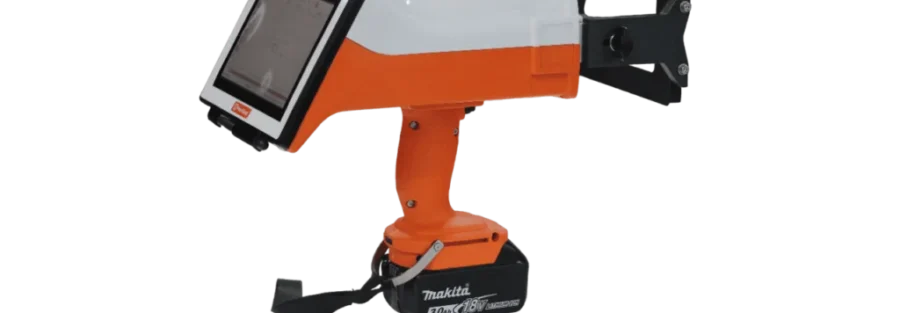
Marking heavy components at a fixed station costs far more than the station itself. Every part has to be lifted, moved, positioned, marked and moved back, which ties up cranes, forklifts and people, and builds queues on the line. A portable dot peen marking machine flips that around: the operator carries the machine to the part and marks it where it sits.
Key insights
- The marking isn’t the slow part, the moving is: on heavy parts, handling can take many times longer than the mark itself.
- Handling is a big line in your costs: industry estimates put material handling at anywhere from 15% to 70% of manufacturing and distribution costs.
- Every lift is a risk: cranes and forklifts are where many shop floor injuries happen.
- Portable machines remove the trip: battery and pneumatic handhelds mark parts in place, at the bay, on the stand or in the yard.
Before you go
For one week, ask your team to note every time a part is moved only so it can be marked. Count the lifts, the minutes and the people involved. That one list usually makes the case for a portable machine on its own.
Fixed marking stations are brilliant for small parts. You load a bracket, press start, unload it, and pick up the next one. The station’s fast because the part’s light.
Heavy components change the maths completely. A pump casing, a gearbox housing, a structural beam or a large forging can’t just be picked up. It needs a crane, a forklift or two people, a slot in the schedule, and somewhere safe to set it down. The marking might take thirty seconds. Getting the part there and back can take half an hour.
That gap is the hidden cost of stationary marking for heavy parts. This guide shows you how to add it up, and when going portable makes sense.
Where does the time actually go?
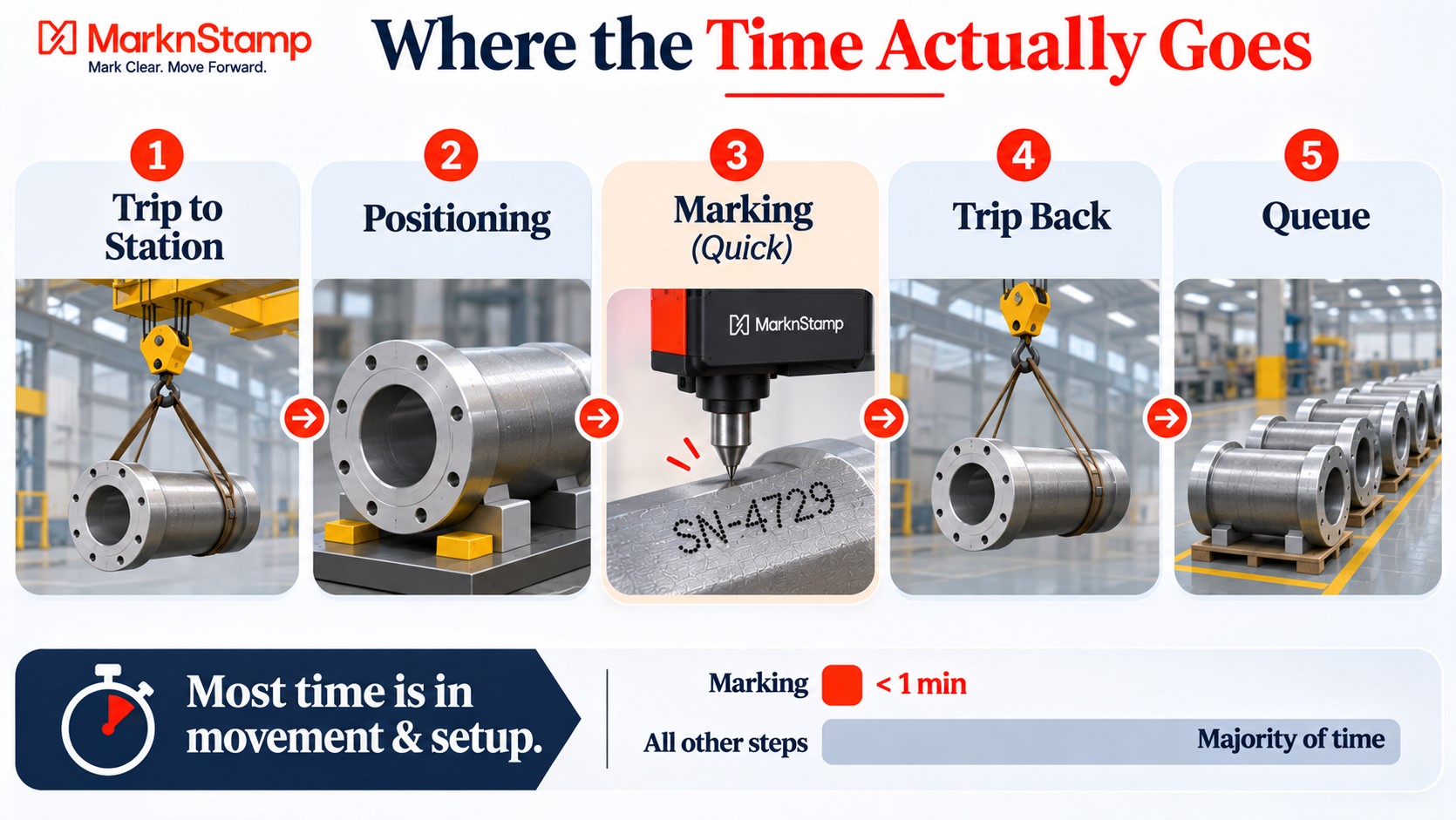
The time goes into moving the part, not marking it. For a heavy component, a single mark at a fixed station usually involves five or six separate steps, and only one of them is marking.
The trip to the station
Wait for the crane or forklift, rig the part, lift it, move it across the floor, set it down. Each step needs a trained operator and often a banksman.
Positioning
Heavy parts don’t sit neatly under a marking head. Someone has to shim, rotate or re-rig the part until the marking face is flat and in reach.
The mark itself
This is the quick bit, often under a minute.
The trip back
Re-rig, lift, move and set down again, back where the part came from or on to the next process.
The queue
While all that happens, other parts wait. If the crane’s busy with marking, it isn’t moving anything else either.
What does stationary marking really cost?
It costs labour, equipment time, floor flow and risk. None of these appear on the marking station’s price tag, which is why they’re easy to miss.
Handling labour
Material handling is one of the biggest hidden costs in any plant. One industry estimate puts it at between 15% and 70% of total manufacturing and distribution costs. The range is wide because it depends so much on the product, but for heavy engineering it sits well up that scale. Every lift made purely for marking adds to it.
Crane and forklift time
Lifting equipment is usually shared. Each lift for marking is a lift that can’t be used for assembly, loading or dispatch, so marking competes with the jobs that actually move the line forward.
Line flow and queues
A fixed station turns marking into a bottleneck. Parts queue to be marked, then queue again for the crane back. On a busy day, that delay can ripple through every process downstream.
Safety risk
Every lift carries risk. US Bureau of Labor Statistics data shows forklift incidents alone caused more than 7,000 nonfatal injuries with days away from work every year between 2011 and 2017. Cutting unnecessary lifts cuts exposure.
Damage to parts
Every time a finished or machined part is rigged and moved, there’s a chance of a knock, a scratch or a dropped load. Marking in place removes one round trip’s worth of that risk.
How do you work out your own cost?
Use your own numbers. This worksheet adds up the cost of marking one heavy part at a fixed station, then multiplies it by your monthly volume.
| Cost item | What to measure | Your figure |
| Handling time per part | Minutes from “needs marking” to “back in place” | ___ min |
| People involved | Crane or forklift operator, banksman, marker | ___ people |
| Labour cost | Hourly rate x people x hours | Rs ___ |
| Equipment time | Crane or forklift hours used for marking | ___ hours |
| Queue delay | Average wait before and after marking | ___ min |
| Parts per month | Heavy parts that need marking | ___ parts |
| Monthly handling cost | Per-part cost x parts per month | Rs ___ |
Reading the result
If the monthly figure is more than a small fraction of what a portable machine costs, the payback is quick. Many plants find handling time, not marking time, is the number that matters.
What portable marking changes
With a portable machine, the “handling time” row drops to the time it takes an operator to walk to the part. The crane, the forklift, the banksman and the queue mostly disappear from the sheet.
When does a portable dot peen marking machine make sense?
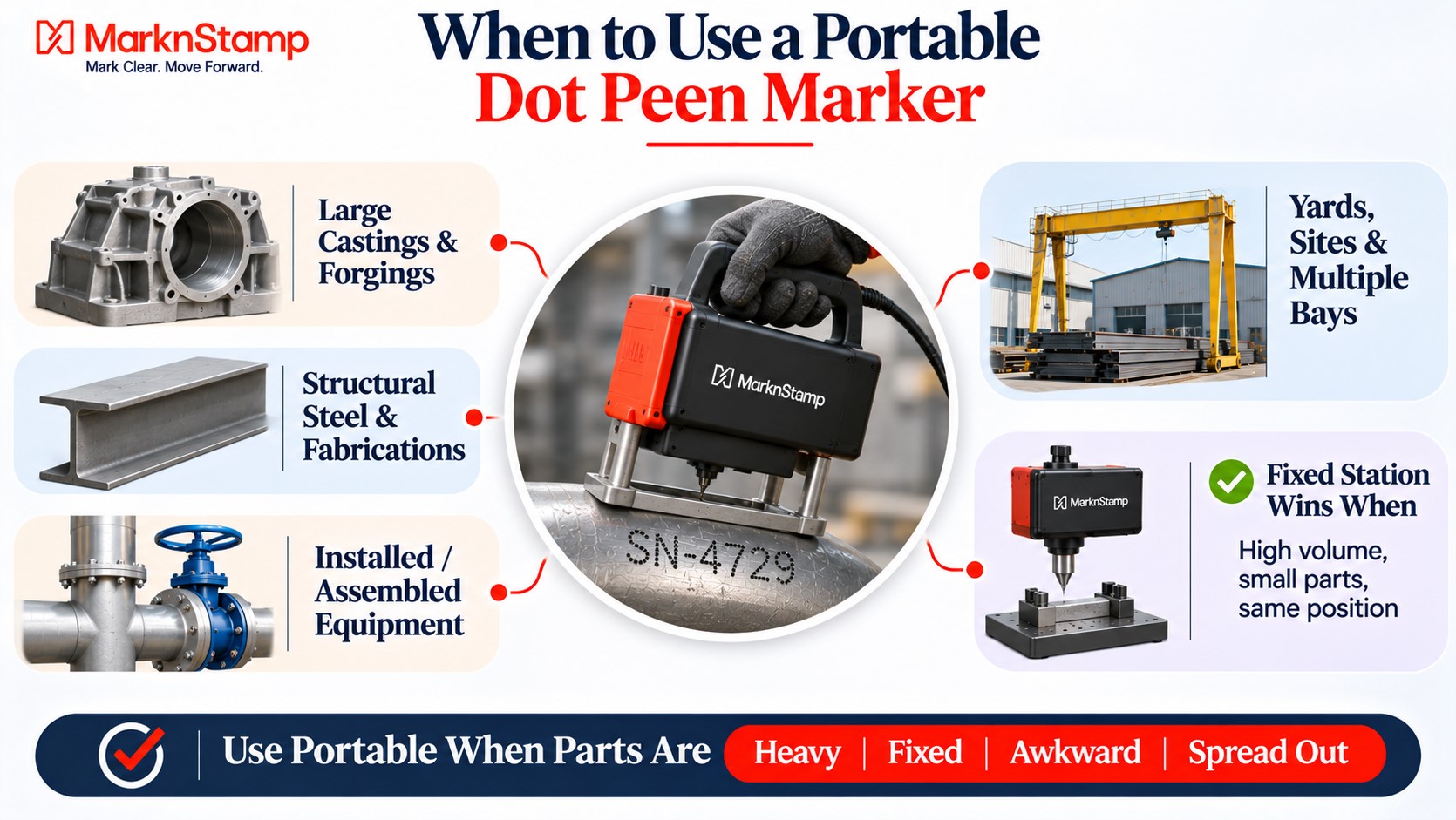
It makes sense whenever parts are heavy, awkward, fixed in place or spread across the site. Here’s where we see it pay off most often.
Large castings, forgings and housings
Parts that need lifting gear to move at all are the clearest case. Mark them on the floor, on the stand or on the pallet.
Structural steel and fabrications
Beams, columns and fabricated frames are long as well as heavy. Taking the machine to them is far easier than bringing them to a bench.
Installed or assembled equipment
Once a part’s bolted into a machine, a pipe run or a frame, there’s no moving it. Portable marking is the only option for adding or replacing an ID.
Yards, sites and multiple bays
When marking happens across several bays, a yard or a customer site, one portable machine can do the work of several fixed stations.
Where a fixed station still wins
For high volumes of small, liftable parts that need the exact same position every time, a fixed station with a fixture is faster and more repeatable. Plenty of plants run both.
Which portable machine fits heavy parts?
Choose by depth, marking area, power source and how long a shift needs to run.
| Machine | Power | Marking area | Best for |
| MNSB-53 | Battery, up to 8 hours | 50 x 30mm | Light, compact marking on smaller faces |
| MNSB-155 | Battery or electric, up to 8 hours | 150 x 50mm | Harder surfaces and hard-to-reach areas |
| MNSB-TC | Battery, up to 4 hours | 100 x 30mm | Touch screen, barcode scan, no computer needed |
| MNSBP-145 | Wireless pneumatic, 4 to 6 hours | 140 x 50mm | Deep marks up to 1mm without an air hose |
| Deep marking machine | Pneumatic | 150 x 50mm | Very deep marks on rough, uneven surfaces |
Battery handhelds for flexibility
The MNSB-53 and MNSB-155 run on lithium batteries for up to eight hours of normal work, with nine force settings to control depth. The MNSB-TC adds a built-in 7 inch touch screen and barcode scanning, so the operator doesn’t need a laptop at the part.
Pneumatic power without the hose
For heavy parts that need deep marks, the MNSBP-145 is a wireless pneumatic dot peen marker that reaches up to 1mm depending on material. Where an airline is available and the surface is rough, the deep marking machine uses permanent magnets and front holding attachments for a steady, hands-free grip on steel.
For a full side-by-side, see our comparison of portable dot pin marking machines. If you’re new to the category, start with what a portable metal marking machine is.
Not sure which suits your parts? Tell us the part, the depth you need and where it sits on your floor, and we’ll suggest a model to trial.
Why choose Mark N Stamp for portable marking?
We’ve designed and built portable dot peen machines in India for years, from compact battery handhelds to wireless pneumatic deep markers. Our range covers the full spread of heavy-part jobs, so we can match the machine to your part rather than stretching one model to fit.
We’ll also help you run the cost worksheet with your team and trial a machine on your real components before you decide.
Wrapping up
A stationary marking station looks cheap until you count what it takes to feed it heavy parts. The cranes, the forklifts, the waiting and the risk are where the real cost sits. Take the machine to the part, and most of that cost goes away.
Run the worksheet on your own floor, then talk to our team about trialling a portable machine on your heaviest parts.
FAQs
What is a portable dot peen marking machine?
It’s a handheld marking machine that strikes characters and codes into metal with a stylus, powered by battery, mains or compressed air. The operator carries it to the part, so heavy components can be marked where they sit.
Is portable marking slower than a fixed station?
Per mark, sometimes slightly. Per part, usually much faster for heavy components, because it removes the crane or forklift trips, positioning and queuing that a fixed station needs.
How deep can a portable marking machine mark?
It depends on the model. Battery handhelds offer nine force settings for light to medium depth. Wireless pneumatic models such as the MNSBP-145 reach up to 1mm, depending on the material.
How long does the battery last on a portable marker?
Battery models in our range run for up to 4 to 8 hours of normal work, depending on the model. Spare batteries let operators swap and keep marking across a full shift.
Can a portable machine mark Data Matrix codes?
Many can. Check the model’s specification, and remember that a handheld needs to be held steady during the mark. Front fixtures and magnets help keep the code sharp on heavy steel parts.
When should I keep a fixed marking station?
Keep one for high volumes of small, liftable parts that need exactly the same position every time. Many plants use a fixed station for small parts and a portable machine for heavy ones.