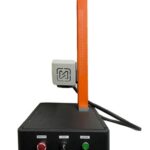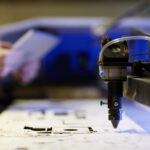
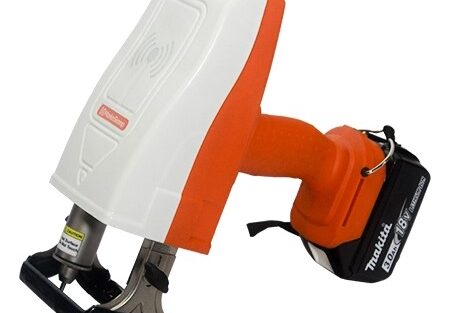
Summary: A metal marking machine permanently applies text, logos, serial numbers, or barcodes onto metal parts for identification and traceability. The main types are dot peen, laser, electrochemical etching, and rotary or hand engraving machines, each suited to different materials, depths, and volumes. Choosing the right one comes down to the material you mark, the depth and detail you need, your production volume, and whether you need a portable or fixed benchtop system.
Marking a part sounds simple until you have to buy the machine that does it.
Suddenly you are weighing dot peen against laser, portable against benchtop, and deep marks against fine detail, with a price tag attached to every choice.
This guide clears that up. It walks through the main types of metal marking and engraving machines, what each is used for, and a straightforward framework for picking the one that fits your parts and your budget.
What is a metal marking machine, and how is it different from engraving?
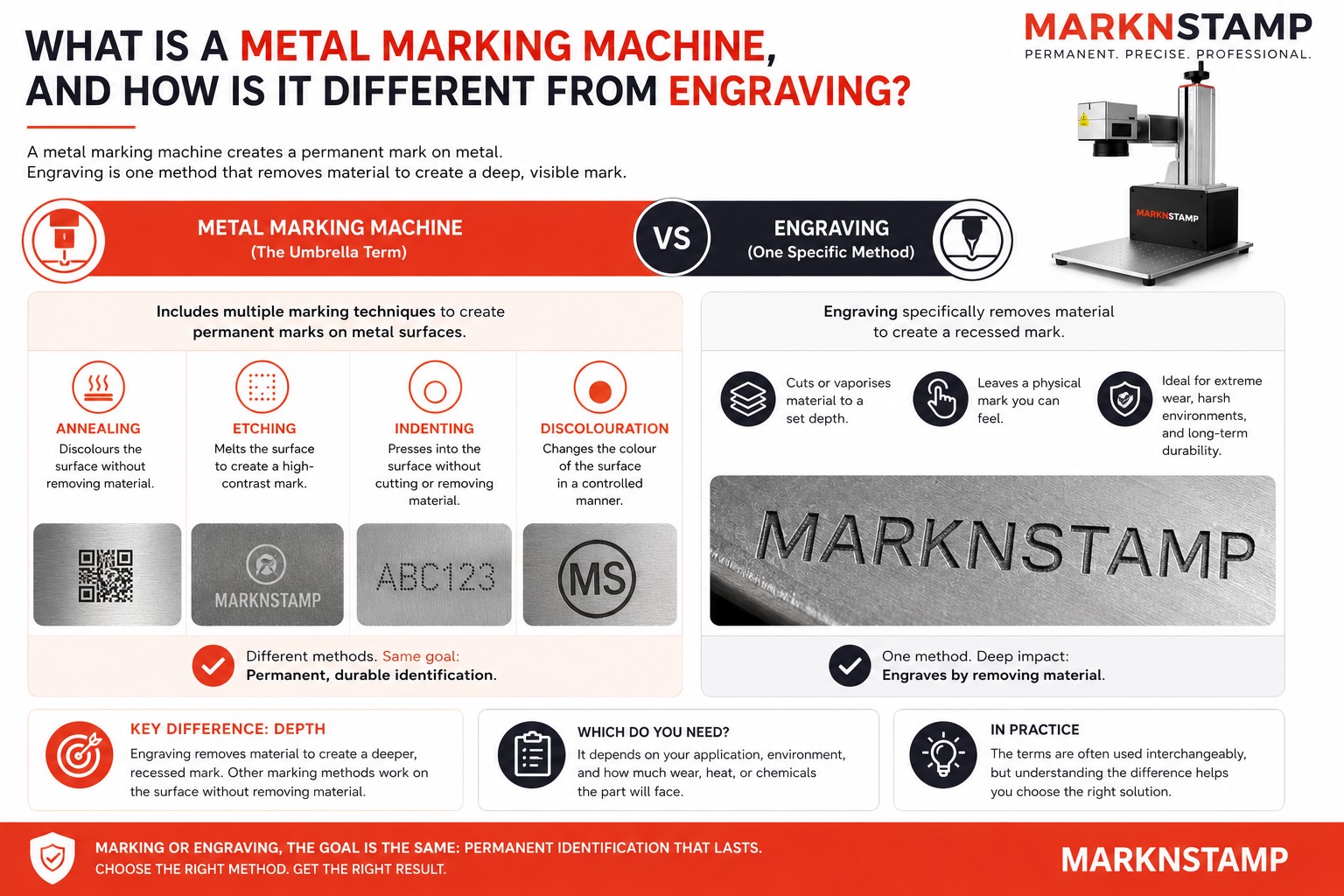
A metal marking machine applies a permanent identifier onto a metal surface, while engraving specifically removes material to cut the mark into the part. Marking is the umbrella term; engraving is one way to do it, alongside indenting, etching, and annealing.
In practice the words overlap, and most buyers use them interchangeably.
The useful distinction is depth. A metal engraving machine physically cuts or vaporises material to leave a recessed mark you can feel, while lighter marking methods can simply discolour or dimple the surface.
Which you need depends entirely on where the part goes and what it has to survive.
What are the main types of metal marking and engraving machines?
The four main types of metal marking and engraving machines are dot peen, laser, electrochemical etching, and rotary or hand engraving. Each uses a different physical process, so they suit different materials, mark depths, and production volumes.
Here is how they break down.
Dot peen marking machines
Dot peen machines use a carbide or diamond stylus to punch a series of tiny indentations that form characters. The marks are deep, tough, and survive shot blasting, painting, and galvanising. Understanding a dot peen marking machine is the natural starting point for most heavy-industry buyers.
Laser marking machines
Laser systems use a focused beam to anneal, etch, or engrave without touching the part. They deliver the finest detail and highest speed, making them ideal for barcodes, logos, and micro-serial numbers on metal.
Electrochemical etching machines
Electrochemical etch uses a low-voltage current and electrolyte to mark conductive metals. It is low-cost and portable, well suited to stainless steel tools and surgical instruments where a shallow, precise mark is enough.
Rotary and hand engraving machines
Rotary engravers spin a cutting tool to carve deep marks, while a handheld engraving machine lets an operator mark awkward, oversized, or fixed parts on site. Both suit low-volume, flexible work rather than production lines.
What are metal marking machines used for?
Metal marking machines are used for part identification, traceability, branding, and regulatory compliance across automotive, aerospace, medical, and general engineering. The most common outputs are serial numbers, batch codes, logos, and 2D data matrix codes.
Traceability is the biggest driver. A permanent code lets a manufacturer track a part from raw material to end use.
Data matrix codes are especially popular because they pack huge information into a tiny mark. A single data matrix can stay scannable even if up to 30% of it is damaged, which is exactly what a part needs when it faces years of wear.
That resilience is why aerospace and medical sectors mark codes directly onto the metal rather than relying on labels that peel or fade.
Portable vs benchtop: which marking machine should you choose?
Choose a portable marking machine when parts are large, fixed, or marked on site, and a benchtop machine when parts come to a fixed station in volume. Portability trades some speed and rigidity for the freedom to mark almost anything, anywhere.
The decision usually follows the part, not the preference.
- Portable or handheld: best for chassis, pipes, large castings, and field marking where the part cannot move.
- Benchtop or integrated: best for repetitive, high-volume marking of smaller components on a line.
A good portable marking machine gives smaller workshops and maintenance teams professional, permanent marks without a fixed installation. High-volume producers usually favour a fixed station for consistency and throughput.
How do you choose the right metal marking machine?
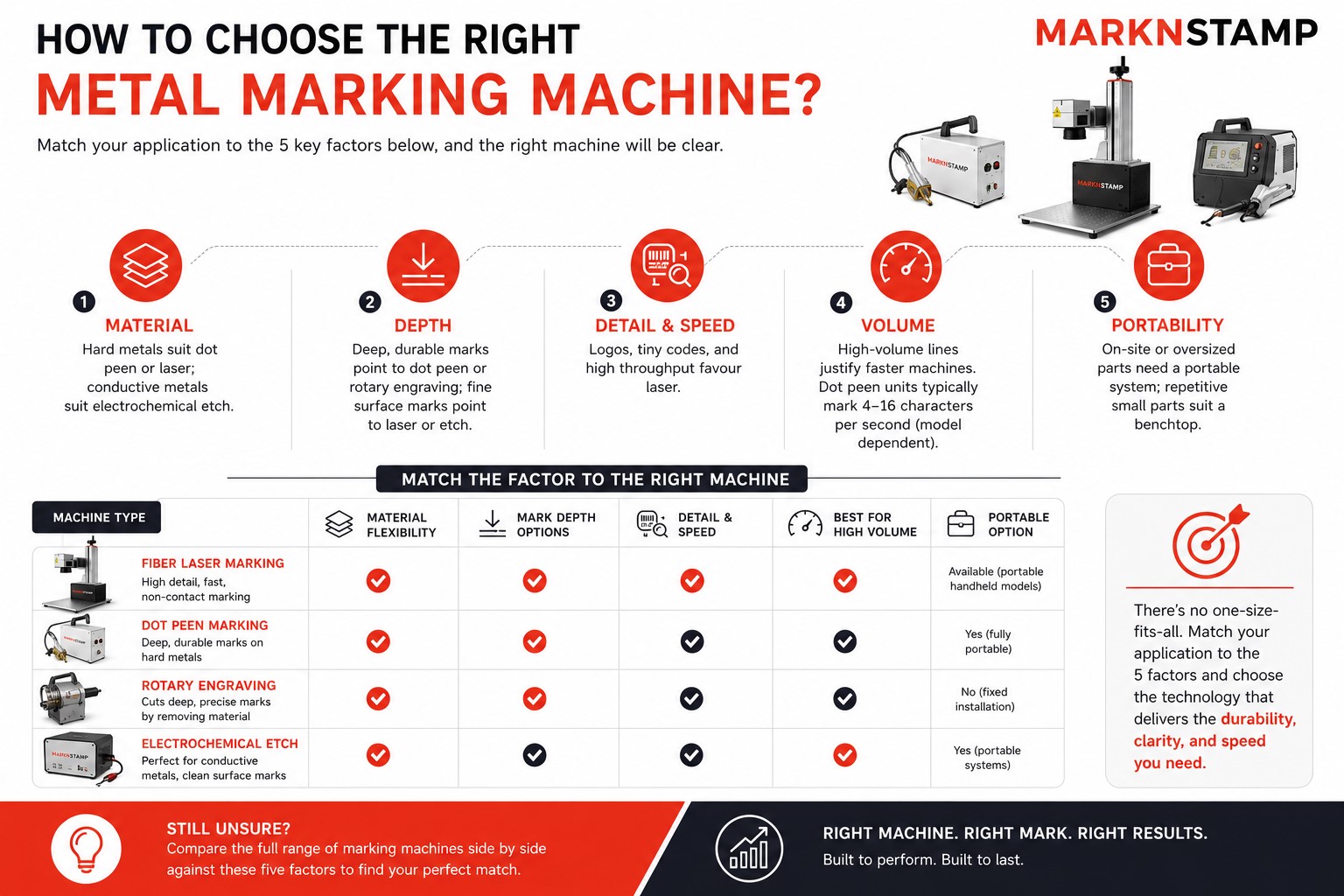
Choose the right metal marking machine by matching it to five things: your material, the mark depth you need, the detail and speed required, your production volume, and whether the job is portable or fixed. Get those right and the machine type almost picks itself.
Work through them in order:
- Material: hard metals suit dot peen or laser; conductive metals suit electrochemical etch.
- Depth: deep, durable marks point to dot peen or rotary engraving; fine surface marks point to laser or etch.
- Detail and speed: logos, tiny codes, and high throughput favour laser.
- Volume: high-volume lines justify faster machines. Dot peen units, for example, typically mark between four and sixteen characters per second depending on the model.
- Portability: on-site or oversized parts need a portable system; repetitive small parts suit a benchtop.
If you are still unsure, comparing the full range of marking machines side by side against these five factors is the quickest way to narrow the field.
Frequently asked questions
What is the best machine for marking metal?
It depends on the job. Dot peen suits deep, durable marks on tough metal, laser suits fine detail and high speed, and electrochemical etching suits shallow, precise marks on stainless steel and surgical tools.
Can a handheld engraving machine mark hardened metal?
Yes, within limits. Handheld dot peen and rotary engravers mark most hardened metals and alloys, though very hard or heat-treated surfaces may need a laser or a diamond stylus for clean, legible results.
Is dot peen or laser marking better?
Both are good for different jobs. Dot peen gives deep marks that survive blasting and painting, while laser gives finer detail, faster speeds, and no contact. Many factories run both to cover every part.
What is a portable marking machine used for?
A portable marking machine marks large, fixed, or hard-to-move parts on site, such as chassis, pipes, and castings. It gives maintenance teams and workshops permanent, professional marks without needing a fixed benchtop installation.
How deep can a metal marking machine mark?
Depth varies by type. Dot peen and rotary engraving produce deep, tactile marks suited to rough handling, while laser annealing and electrochemical etching produce shallow, precise surface marks that still resist wear and corrosion.
Why buyers trust Mark N Stamp
Choosing between four machine types, several price points, and portable versus fixed setups is where expert guidance saves real money, and this is where Mark N Stamp helps.
The team works with manufacturers to match the right marking technology to the material, depth, and volume in front of them, spanning dot peen, laser, and portable systems built for Indian industrial conditions. The emphasis is on durable, low-maintenance equipment backed by genuine technical support rather than a rushed sale.
That practical, requirement-first approach is what makes the brand a trusted name for metal marking and engraving across automotive, engineering, and manufacturing sectors.
The right metal marking machine is the one matched to your parts, not the one with the longest spec sheet. Pin down your material, depth, detail, volume, and portability needs first, and the choice becomes far simpler. If you want a clear recommendation for your specific application, talk to our team today and explore the marking and engraving machines built to keep your production permanent, traceable, and efficient.