Summary: A pneumatic marking machine uses compressed air to drive a stylus into metal, and the three pneumatic machines in most manufacturers’ catalogues are not interchangeable. A standard portable pneumatic unit suits flat, accessible parts at a bench. A deep marking machine handles rough castings with surface variation up to 12mm and marks up to 1mm deep. A wireless pneumatic machine removes the airline entirely for work that happens away from a compressor. Choose by surface condition, required depth, and whether an air supply can physically reach the part.
Most buyers who ask for a pneumatic marking machine have already decided on the technology. What they have not decided, usually because nobody has laid it out plainly, is which pneumatic machine.
There are three genuinely different ones, and the gap between them is not a price ladder. The machine that suits a rough casting is the wrong machine for a nameplate at a bench, and neither helps if the part is bolted into a structure 40 metres from the nearest compressor.
Here is how the three actually differ, and which questions decide it.
What does a pneumatic marking machine do differently from an electric one?
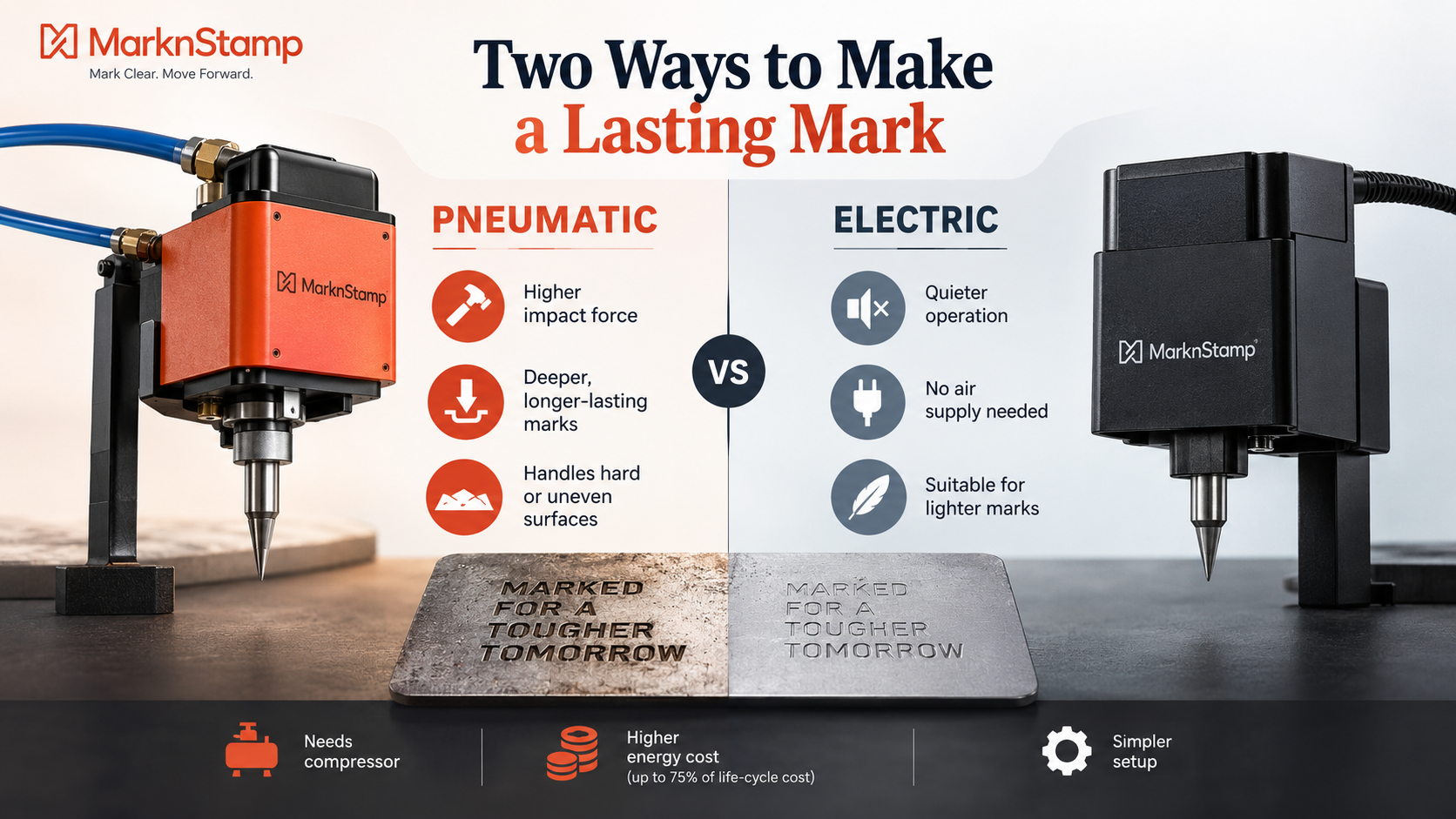
A pneumatic marking machine drives its stylus with compressed air rather than an electromagnetic coil, which gives it more impact force per strike and therefore more depth on hard or uneven material. Electric machines are quieter, need no air supply, and suit lighter marks on accessible surfaces.
That force difference is the whole reason the pneumatic category exists. Air-driven strikes push material aside rather than skimming it, so the mark survives shot blasting, powder coating and years of handling.
The trade-off is infrastructure. Pneumatic means a compressor, an airline, a regulator, and someone maintaining all three. That is not free. Energy usage accounts for up to 75% of a compressed air system’s total life-cycle cost, which is worth knowing before you commit a production cell to air.
Which pneumatic machine suits flat, accessible parts?
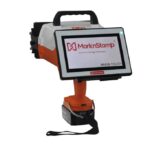
The standard portable pneumatic machine is the right answer for flat or gently curved parts that can be brought to a bench or reached easily on a line. It comes in three marking windows, 150mm x 50mm, 80mm x 30mm and 50mm x 30mm, weighs 3.2kg with the front fixture fitted, and runs a 2-axis controller with a 7 inch touch screen.
Linear guides on both the X and Y axis are what keep the depth consistent across the whole window. Without them, a mark that looks crisp on the left of the window goes shallow on the right, which is exactly the failure that gets a batch rejected at goods-in.
The stylus is the part buyers underestimate. LP-10 is the standard for steel, LP-06 suits aluminium, and the EM-01 covers electric marking. Swapping to the correct one takes a minute and changes the mark quality more than any setting on the screen does. The portable pneumatic and EM machine range is also available in electric versions and can be adapted to a table top format, so a single purchase can cover both handheld and benched work.
When do you actually need a deep marking machine?
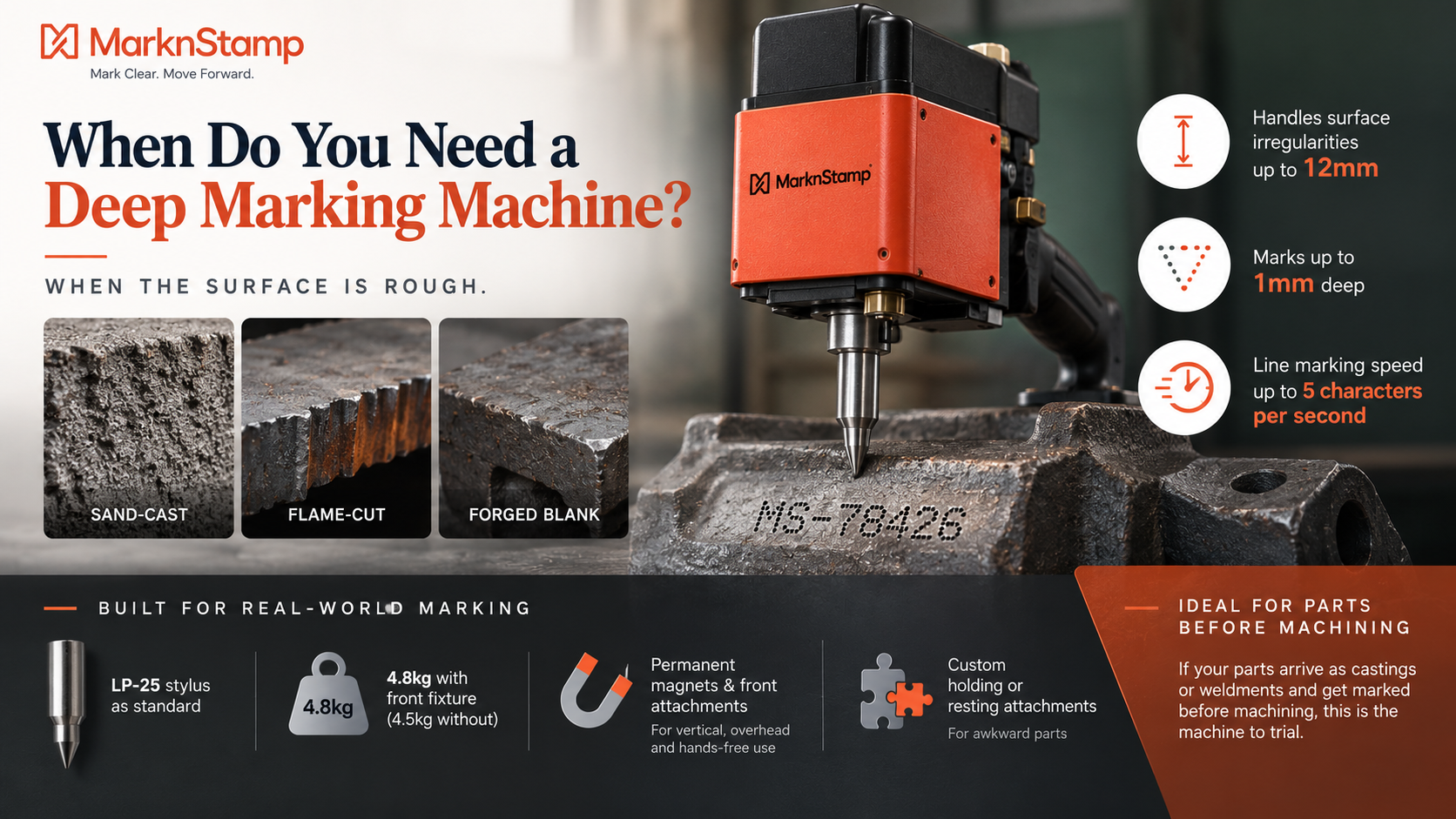
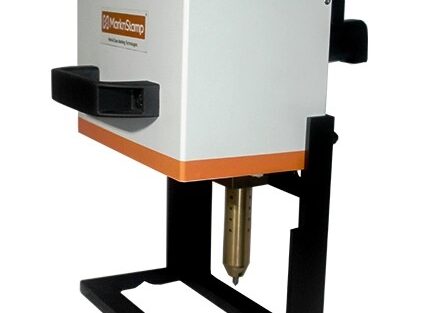
You need a deep marking machine when the surface is rough, not when the mark needs to be deeper for its own sake. This machine uses longer stylus strokes to cope with surface irregularities up to 12mm and produces marks up to 1mm deep on soft steel parts.
Twelve millimetres of irregularity is a lot. That is a sand-cast surface, a flame-cut edge, a forged blank before machining. A standard machine bottoms out or skips dots on that kind of surface because its stroke simply is not long enough to follow the peaks and troughs.
The other reason to specify one is line marking speed. The pneumatic Vibropeen mode runs continuous line marking at up to 5 characters per second, which changes the economics on long serial strings.
Practical details that matter on the floor:
- LP-25 stylus as standard, built for the longer stroke and the harder duty
- 4.8kg with the front fixture, 4.5kg without, which puts it firmly in two-hand territory, since ergonomics guidance recommends limiting the weight of a one-handed tool to 1.4kg or less
- Permanent magnets and front holding attachments for grip on vertical and overhead surfaces, and for hands-free operation
- Component holding or resting attachments can be customised around an awkward part
If your parts arrive as castings or weldments and get marked before machining, the deep marking machine is the one to trial. If they arrive flat and finished, it is more machine than the job needs.
What changes when the machine is wireless?
A wireless pneumatic machine removes the airline and the compressor from the equation entirely. The MNSBP-145 is a battery-powered pneumatic dot peen marker with a 140mm x 50mm window, marking depth up to 1mm depending on the material, a lithium-ion battery good for 4 to 6 hours of work, and control through an app that runs on Android, iOS and Windows.
This is the machine for marking that happens where the part is. Pipeline sections, fabricated structures, installed plant, anything too large or too fixed to bring to a marking station. Anyone who has run 30 metres of air hose across a shop floor to mark one weldment knows precisely why this exists. Mark N Stamp built it as the first wireless pneumatic dot peen machine of its kind.
It is worth being honest about the limitation. Battery pneumatic gives you mobility, not unlimited duty. A full shift of continuous high-volume marking is still a job for a machine on a permanent air supply, and the pneumatic battery operated machine is designed around mobility rather than around 8 hours of uninterrupted production.
How do the three compare side by side?
| Portable pneumatic | Deep marking | MNSBP-145 wireless | |
| Marking window | 150×50, 80×30, 50x30mm | 150 x 50mm | 140 x 50mm |
| Standard stylus | LP-10 / LP-06 / EM-01 | LP-25 | Fitted for deep portable marking |
| Surface irregularity | Flat to gently curved | Up to 12mm | Handles uneven surfaces |
| Depth | Consistent across window | Up to 1mm on soft steel | Up to 1mm, material dependent |
| Weight with fixture | 3.2kg | 4.8kg | Lightweight handheld |
| Air supply | Required | Required | None |
| Best for | Bench and line work | Castings, forgings, weldments | Field and on-site marking |
Read that table by row. Surface condition picks the machine more often than depth does, and air availability overrules both.
Which one should you trial first?
Bring three of your own parts to a demonstration, not a sample coupon. A flat machined face, your roughest casting, and the part that is hardest to physically reach. Those three tell you in twenty minutes what a specification sheet cannot tell you in a week.
Mark N Stamp manufactures all three pneumatic formats at its Bhiwandi plant and has been building dot peen, pneumatic and laser marking equipment for over 52 years, supplying customers in more than 40 countries. That range matters here for one reason only, it means a trial can compare the machines against each other rather than against a single option someone is trying to sell you.
Frequently asked questions
Can a pneumatic marking machine work without a compressor? Only the battery-powered version can. Standard pneumatic machines need a compressed air supply, a regulator and a hose, while the MNSBP-145 runs on a lithium-ion battery and needs no airline at all.
How deep does a pneumatic dot peen mark go? Up to about 1mm on soft steel with a deep marking machine. Depth varies with material hardness, stylus type and air pressure, so hard alloys will mark shallower than mild steel at the same settings.
What surface roughness can a deep marking machine handle? Surface irregularities of up to 12mm. That range covers sand castings, flame-cut edges and forged blanks before machining, all of which a standard-stroke machine struggles to follow without skipping dots or losing depth.
Do I need a different stylus for aluminium? Yes. LP-06 is the standard stylus for aluminium marking, while LP-10 suits steel. Using a steel stylus on aluminium tends to displace too much material and blurs the mark edges.
Can one machine handle both bench and portable work? Often, yes. The portable pneumatic range can be adapted to a table top version with front-fitted trays, so a single machine covers both handheld marking on large parts and benched marking on smaller components without a second purchase.
Pneumatic marking is one technology with three quite different tools inside it, and the surface condition of your worst part usually decides which one you need. Talk to our team and bring your own components for a trial before you commit to a specification.