Summary: An engraving machine cuts, burns, or scratches a permanent design into a surface by removing material, unlike printing which sits on top. The main types are laser, rotary or CNC, diamond-drag, and hand engraving machines, each suited to different materials, depths, and detail levels. Choosing the right one depends on what you engrave, how deep and detailed the mark must be, your production volume, and your budget. For a durable engraving machine for metal, laser and rotary systems are the usual choices.
Engraving is one of the oldest ways to make a mark permanent, and one of the most misunderstood when it comes to buying the machine.
Do you need a laser? A rotary spindle? A diamond tip? The answer changes with the material and the job.
This guide breaks down the main types of engraving machines, what each is genuinely good at, and a clear way to choose the right one for your work.
What is an engraving machine, and how does engraving work?
An engraving machine creates a permanent design by physically removing or altering the surface of a material, leaving a recessed or high-contrast mark. Unlike printing or labelling, engraving becomes part of the object itself, so it cannot rub off, peel, or fade over time.
The core idea is subtraction. Material is cut, vaporised, or displaced to reveal the design.
That is what separates engraving from lighter surface marking. A true engraving machine for metal leaves a mark you can often feel, which is exactly why it survives heat, handling, and wear.
The method used to remove that material, a spinning tool, a laser beam, or a diamond tip, is what defines each machine type.
What are the main types of engraving machines?
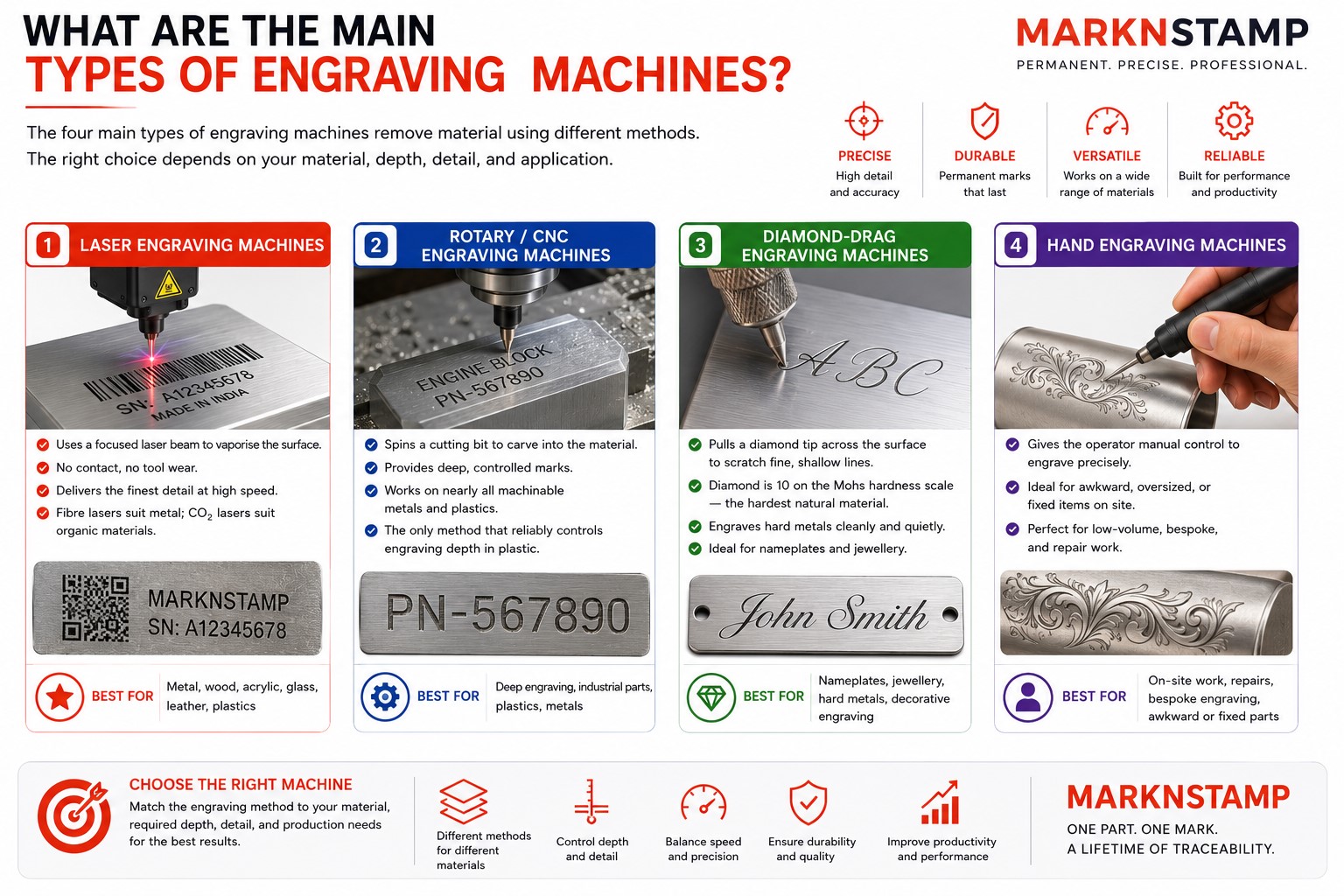
The four main types of engraving machines are laser, rotary or CNC, diamond-drag, and hand engraving machines. Each removes material differently, so they suit different materials, depths, and levels of detail.
Here is how they compare.
Laser engraving machines
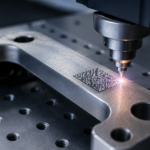
An engraving machine laser system uses a focused beam to vaporise the surface with no contact. It delivers the finest detail at high speed and handles metal, wood, acrylic, glass, and leather. Fibre lasers suit metal, while CO2 lasers suit organic materials.
Rotary and CNC engraving machines
Rotary engravers spin a cutting bit to carve into the material, giving deep, controlled marks. They work on nearly all machinable metals and plastics, and are the only method that reliably controls engraving depth in plastic.
Diamond-drag engraving machines
Diamond-drag engraving pulls a diamond tip across the surface to scratch fine, shallow lines. Because diamond sits at 10 on the Mohs hardness scale as the hardest natural material, it engraves hard metals cleanly and quietly, ideal for nameplates and jewellery.
Hand engraving machines
A hand engraving machine gives an operator manual control to engrave awkward, oversized, or fixed items on site. It suits low-volume, bespoke, and repair work where a fixed machine cannot reach.
What can engraving machines be used for?
Engraving machines are used for industrial part marking, branding, nameplates, signage, jewellery, awards, and personalised products. Any application that needs a permanent, high-quality mark on metal, plastic, wood, or glass is a candidate for engraving.
The range is genuinely wide.
On the industrial side, engraving applies serial numbers, logos, and traceability codes to metal components. On the commercial side, it creates signage, trophies, engraved jewellery, and branded gifts.
Demand keeps climbing across both. The laser engraving machine market alone was valued at USD 6.85 billion in 2024 and is forecast to reach USD 12.25 billion by 2032, driven by manufacturing and personalisation.
For industrial buyers specifically, our guide to choosing an engraving machine for metal drills into the part-marking side in more detail.
Laser vs rotary engraving: which should you choose?
Choose laser engraving for fine detail, high speed, and non-contact work across many materials, and rotary engraving for deep cuts, controlled depth, and thick or plastic materials. Both are excellent, but they solve different problems.
The decision usually follows the material and the depth.
| Factor | Laser engraving | Rotary or CNC engraving |
| Detail | Very fine | Good, tool-limited |
| Depth | Shallow to moderate | Deep, controlled |
| Speed | Fast | Moderate |
| Materials | Metal, wood, acrylic, glass | Metals, plastics |
| Contact | None | Physical cutting |
For fine logos and codes on metal, laser wins. For deep-cut plastic signage or thick nameplates, rotary wins. Many workshops keep both to cover the full spread of jobs, alongside marking tools like a dot peen machine for indented industrial marks.
How do you choose the right engraving machine?
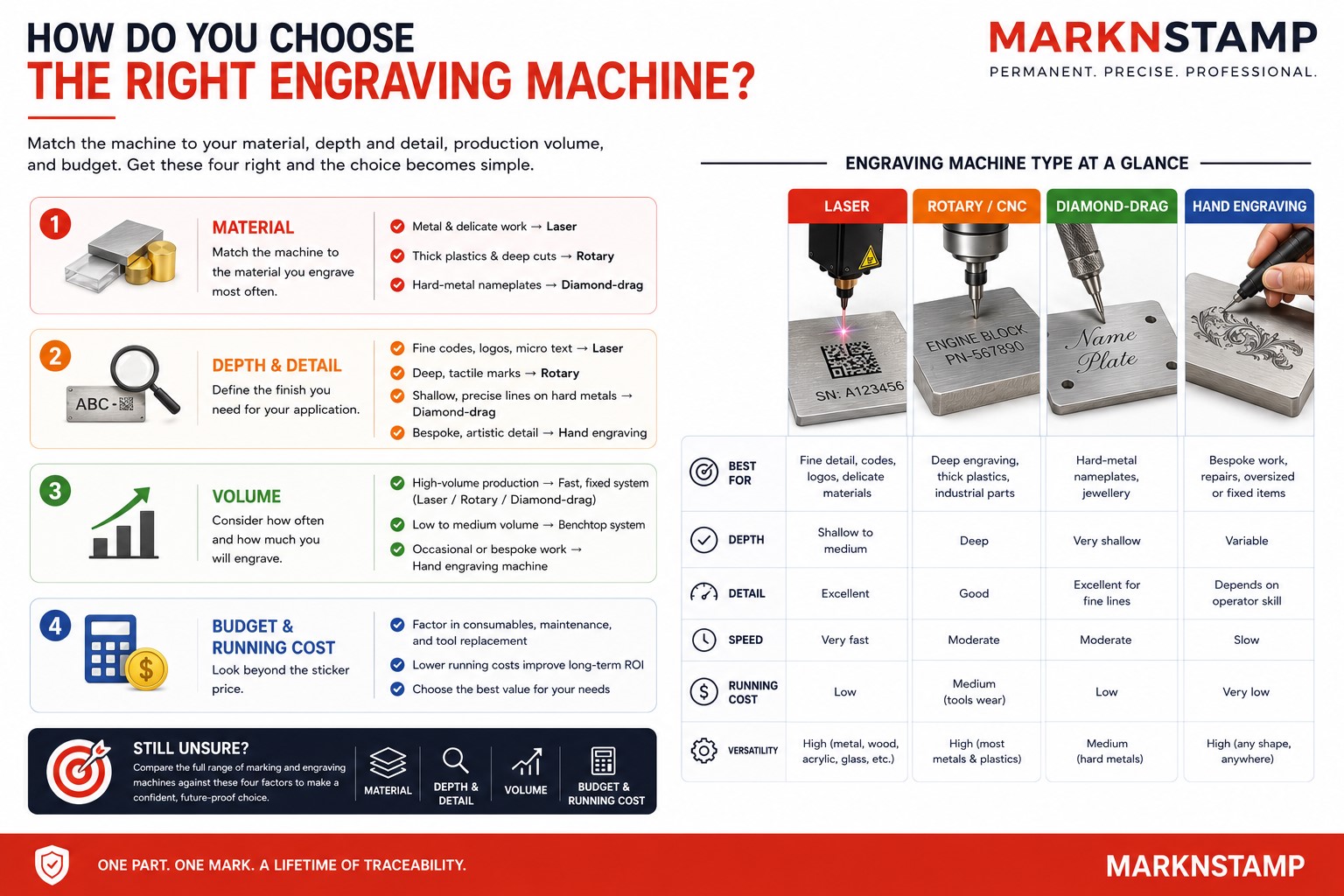
Choose the right engraving machine by matching it to your material, the depth and detail you need, your production volume, and your budget. Nail those four and the machine type becomes obvious rather than overwhelming.
Work through them in order:
- Material: metal and delicate work favour laser; thick plastics and deep cuts favour rotary; hard-metal nameplates favour diamond-drag.
- Depth and detail: fine codes and logos point to laser; deep, tactile marks point to rotary.
- Volume: high-throughput production justifies a fast fixed system; occasional or bespoke work suits a hand engraving machine.
- Budget and running cost: factor in consumables, maintenance, and tool replacement, not just the sticker price.
If you are still weighing options, comparing the full range of marking and engraving machines against these four factors is the quickest route to a confident choice.
Frequently asked questions
What is the best engraving machine for metal?
For most metal work, a laser or rotary engraving machine is best. Laser suits fine detail, logos, and codes, while rotary suits deep, durable cuts. Diamond-drag is ideal for quiet, precise marks on hard-metal nameplates.
Can one engraving machine work on all materials?
Not quite. Fibre lasers excel on metal, CO2 lasers on wood and acrylic, and rotary engravers on metals and plastics. Choosing depends on the materials you use most, though some machines handle a broad range.
What is the difference between engraving and marking?
Engraving removes material to cut a recessed design you can often feel, while marking can simply discolour or dimple the surface. Engraving is generally deeper and more durable, but both create permanent, long-lasting results.
Is laser or rotary engraving better?
Both are good for different jobs. Laser engraving offers finer detail, higher speed, and no contact, while rotary engraving offers deeper, controlled cuts and works well on thick plastics and metals. Your material and depth needs decide.
How deep can an engraving machine cut?
Depth varies by type. Rotary and CNC engravers cut the deepest, controlled marks, laser engraving ranges from shallow to moderate depth, and diamond-drag produces fine, shallow lines. The material and number of passes also affect final depth.
Why buyers trust Mark N Stamp
Choosing between laser, rotary, diamond-drag, and hand engraving across different materials and budgets is where expert guidance saves real money, and this is where Mark N Stamp helps.
The team works with manufacturers and businesses to match the right engraving or marking technology to the material, depth, and volume in front of them, all built for demanding Indian conditions. The focus is on durable, low-maintenance equipment backed by genuine technical support rather than a rushed sale.
That practical, requirement-first approach is what makes the brand a trusted name for engraving and marking across industrial, signage, and manufacturing sectors.
The right engraving machine is the one matched to your material, depth, and detail, not the one with the flashiest specification. Pin down what you engrave, how deep, how detailed, and how often, and the choice falls into place. If you want a clear recommendation for your specific application, talk to our team today and explore the engraving and marking machines built to make every mark permanent, precise, and professional.